


Discover Kirkmahoe


News and information throughout the area


Good afternoon,
Just a quick update to let you know about Nith Life's upcoming events. Both these talk nights will be at The Bridge at 6pm with a prompt start.
Firstly we have Nic Coombey from Solway Firth Partnership talking about Seagrass, the science behind the Solway tides, the current and marine litter. This talk will be on Tuesday 27th October. Please reserve your space through Eventbrite by clicking on this link.
Secondly we have Dr Michelle Bloor an ecotoxicologist from Glasgow University on Tuesday 24th November talk titled The Pollution Paradox: Chemicals, Waste and the Price of Progress. Over the past 25 years as a government scientist and academic, Michelle has been involved in a plethora of assessments, policy developments, research projects, and other activities related to addressing the sound management of chemicals, waste and pollution. To reserve your spot please book here.
These are both free events but donations for costs would be appreciated. There will be a collection box at the event
Please help us publicise these events far and wide using the posters attached below and let me know if you need them in a different format. You can also follow us on Facebook by searching for NithLife.
We are really delighted to have both these speakers coming to speak to us and look forward to their presentations followed by a question and answer sessions. This is your chance to find out more about either or both these subjects.
These are our final events of the year, with no meeting in December, but we will be back in touch in the New Year.
Regards
Nith Life
Nith Life is a registered charity SCO53508
National Centre for Resilience Newsletter
This month, we’re pleased to share our 10-year Impact Report, reflecting on some of the key projects, partnerships and achievements that have shaped the National Centre for Resilience over the past decade.
We are also pleased to feature a guest blog from Neill Bo Finlayson who explores the growing threat of climate disinformation in Scotland.
As always, we've included a selection of essential reading, upcoming events and opportunities from across the resilience community. We hope you find something that informs your work, sparks ideas, or encourages new conversations.
Tarras and Luce River Projects Show What New £20,000 Grants Could Bring to D&G
Two Dumfries and Galloway projects are already exploring how to restore woodland beside local rivers. Now a new round of grants could help other groups across the region develop their own plans.
The Langholm Initiative received funding last year for Connecting Tarras Riverwoods, which will explore opportunities in the Tarras Valley with the local community. Galloway Fisheries Trust was also awarded a grant for Luce Riverwoods: Enhancing the Future. Both were among 11 projects supported across Scotland. www.riverwoods.org.uk
The Riverwoods Development Grant has now reopened. Not-for-profit organisations can apply for up to £20,000 to investigate where river woodland could be created or restored, speak with landowners and communities, and produce a practical plan.
Trees and other vegetation beside rivers and burns can provide shade for fish, create wildlife habitat and help protect riverbanks. For local groups with an idea for a stretch of water near them, the grant offers funding to work out what is suitable and achievable before any restoration begins. www.riverwoods.org.uk
There is £250,000 available across Scotland in this round. Applications close on 1 December 2026, with successful groups due to hear in January 2027. They will have until June 2028 to complete their plans.
Find out more and apply through Riverwoods.
From DGWGO

Nith Life Autumn Events
Hello
October is set to be a busy month for meetings as it includes Climate Week, The Wild Goose Festival, our AGM and our usual meeting on the last Tuesday of the month.
In date order we have:
1st October Stephen Rutt - The Waterlands: A journey round the watercycle. This talk will be held at the Bridge, Dumfries at 6pm. Come along for a journey round the water cycle with Stephen Rutt a naturalist and award-winning author of five books. This in-person event dives into the fascinating world of water, exploring how it moves and shapes our planet. Perfect for anyone curious about nature and the environment. Don't miss out on this fun and engaging experience! Please book your free ticket here to reserve your spot. This talk is funded through The D&G Climate Hub, facilitated by Galloway & Southern Ayrshire Biosphere.
4th October Bridgend Community Garden Penpont A hands on event showing what we do for our Riverfly Surveys as part of a Citizen Science project. This will follow on from the Buccleuch and Queensberry Caledonia Pipe Band leaving on their 10K sponsored walk just after 10am. We will be there until 11.30 so feel free to drop in anytime to see what we do and if you might want to consider volunteering for next season (absolutely no pressure). We also have Annan Griffin to talk about invasive species and what can be done about them. This event is also funded through The D&G Climate Hub, facilitated by Galloway & Southern Ayrshire Biosphere as part of Climate Week.
6th October Nith Life AGM The Bridge 6pm. This time we are looking for volunteers for Trustees and office bearers. This invite we sent out in a separate email on 6th Sept.
13th October Dr Larry Griffin - Rings, Rings and Pings. The Stove Dumfries 6pm. This event is part of the Wild Goose Festival and is also ticketed. Click here to book free tickets for this and other Wild Goose Festival Events. How well do you really know our geese? Join local goose expert Dr Larry Griffin for an informal evening exploring the lives of the wild geese that make Dumfries & Galloway their home each year. From traditional metal and brightly coloured leg rings to modern GPS trackers that let us follow their movements from our phones, the ways we observe geese have changed dramatically. But what can these rings, pings and sightings actually tell us about their lives, journeys and the challenges they face? With stories, photographs and a presentation drawn from a lifetime of working with and following geese, Larry will share what he’s learned along the way. Come for the geese. Stay for the stories.
27th October Nick Coomby from Solway Firth Partnership. Venue still to be confirmed.
We look forward to seeing you. Please come along and bring your friends. Feel free to print out and display the attached posters. You can also click here for the D&G Climate Hub brochure for more Climate Week events in D&G.
Nith Life


.jpg)
Hi fellow Nith Lifers
I have a couple things here that might interest you
1 - Invitation to participate in a River Nith catchment wide living artwork for Nith Raid
Artists Nick Millar and Minty Donald are inviting people throughout the Nith catchment to help with their A river is not a line on a map project.
-
Visit a river, or burn or stream that feeds into the River Nith, north of Dumfries.
-
Collect around 4 litres of water in clean containers.
-
Label the containers with the name of the burn or river.
-
Email mintydonald@gmail.com to let the artists know where your water has come from.
-
Remember to thank the river.
You can then bring your water to Nithraid before 2pm on Saturday 15th August, where it'll become part of a living map of the River Nith, or you can drop the containers of water off in Dumfries at The Standard, 135-139 High Street, Dumfries, DG1 2QT between 11am and 4pm in the two weeks leading up to Nithraid.
Every container helps tell the story of our connected waterways!
I have attached a schedule of the Nithraid activities on 15th August.
2 - TONIGHT - Showing of the film 'People's Emergency Briefing' followed by a discussion
You are invited to a showing of the film 'People's Emergency Briefing' which is about the climate and nature crisis. The film will be this evening (30th July) in Dunscore. It is a free event, but places are limited so please book, details on the attached poster.
Regards
Nith Life
Adventurous Participants Sought For A Summer Of Coastal Woodland Quests!
An exciting, fun and free programme of imaginative events is planned for the summer holidays, hosted in coastal woodland sites across Dumfries & Galloway, from obstacle courses to making and using your own ink.
The events are either designed for under 8-year-olds or over 8-year-olds, and aim to give our region’s young people the ability to enjoy and better understand our Coastal Woodlands. They are led by qualified outdoor event leaders and promise to be a highlight of the summer holidays.
The programme of events is led by Dumfries & Galloway Woodlands, a local charity supporting trees, habitats and the people that depend upon them in our region. The events are funded thanks to support from the D&G Coastal Benefit Fund.
The Whitesands scheme is considered outdated because:
• It is based on old engineering concepts.
• Costs have risen sharply while the design has not been modernised.
• Public expectations for consultation, heritage protection, and environmental sensitivity have evolved.
• Newer, less intrusive technologies are now available and widely used.
• Critics argue it no longer represents best value or best practice in flood management.
A new coordinated approach to tackling litter, fly-tipping and dog fouling across Dumfries and Galloway is set to move forward.
Members of Dumfries and Galloway Council’s Economy and Infrastructure Committee will consider a report on Tuesday 9 June outlining the next steps in developing a Litter Prevention Strategy and Draft Litter Reduction Action Plan for the region.
The report presents findings from extensive engagement with residents, communities and businesses, with over 1100 responses received. Feedback highlights strong support for a joined-up approach combining practical improvements, education, enforcement and partnership working.
Building on this, the draft action plan sets out a coordinated programme of work focused on five key areas: improving infrastructure such as bins and signage; encouraging behaviour change through education; strengthening enforcement; supporting community involvement; and working more closely with businesses.
If agreed, the plan will move into early implementation through cross-service working, with a final strategy expected to come back to committee later this year.
Although independent audits show that Dumfries and Galloway performs strongly on street cleanliness, the report recognises that public perception does not always reflect this – particularly in rural areas and along road networks. The proposed approach aims to maintain high standards while responding more visibly to local concerns.
Work is already underway, including the reinstatement of layby bins, increased roadside cleansing activity, and engagement with partners such as the haulage industry to address persistent issues in key locations.
Chair of the Economy and Infrastructure Committee, Councillor Andy Ferguson, said:
“Developing this Action Plan is an important step in strengthening how we manage litter across the region. The recommendations set out a clear, coordinated approach that will support effective delivery.
“This work will help protect our environment while supporting communities to take pride in their local area.”Vice-Chair, Councillor Tony Berretti, added:
“The feedback we’ve received shows people want to see practical action. This plan brings together measures to improve facilities, target problem areas and support local communities.
“It will help deliver real, visible improvements for residents across Dumfries and Galloway.”
Subject to approval, the draft action plan will be progressed over the coming months, with a finalised Litter Prevention Strategy and Action Plan to be presented to councillors later in 2026.
The full committee report can be read at: https://dumfriesgalloway.moderngov.co.uk/ieListDocuments.aspx?CId=624&MId=6492
DGWGO
Nith Life Ellisland events and Street Choir festival
Here are two events at Ellisland Farm for your diary; one Nith Life one non Nith Life
Nith Life July event at Ellisland Farm 18th July 6pm to 11pm
Nith Life would like to invite you to join us for a wildlife-packed evening at Ellisland Farm. We will be looking for bats, moths, owls and other night-time wildlife.
There will be demonstrations of Fly Tying, and poetry and storytelling, as well as an open stage session, and maybe even a evening walk along the Nith.
This event is ticketed, you can get your FREE ticket here.
Ellisland Plant recording event 16th May
On Sat 16th May Chris Miles, plant recorder for Dumfrieshire will be leading a recording session at Ellisland Farm.
Anyone with a pair of eyes can participate.
The plan is to try and record plants across the farm....one boundary is the river Nith, one boundary is the lower end of the Lagan Burn, one boundary is the A76, and the fourth boundary abuts Friars Carse.
Start time 10.30, bring packed lunch drink, and suitable clothing (wellies could be useful for an area of wet alder woodland).
No need to book for this, just turn up on the day
And finally another non Nith Life event for your diary and a request for volunteers
Street Choirs Festival, Dumfries, 12-14th June
3 members of the Nith Life ‘team’ sing with the Moniaive based Cairn Chorus. This choir, along with a couple of local 'sister' choirs are hosting the annual 'Street Choirs Festival' in June this year- 12th – 14th. It’s a weekend event and has been held in various places around England, especially the north of England for the past 42 years. This is the first time it is coming to Scotland. We are expecting 35 choirs from around the country - about 800 singers in all. It's mostly an in-house event at The Easterbrook Hall, but there are a couple of public performances which all are welcome to enjoy - both on Saturday 13th June.
First off, there is a 'Massed Sing' (about 6 songs sung by the entire crowd of 800) in Dock Park at 12 noon, followed by a couple of hours of individual choirs performing their own repertoire in designated spots around the town between 1 & 3 pm. There will be a rota of 10 minute slots for different choirs at the different venues. Do come and listen!
We are putting a shout out for some volunteer stewards (and First Aiders) for both of these town centre events.. and wondered whether any of the lovely Nith Life supporters might be available to help out. Stewarding would probably either involve holding a sign aloft to indicate where different voice parts should stand in Dock Park (probably no more than an hour) or being at one of the 'busking' spots in the town centre with some signage to let the choirs know where to be. That will not be more than a couple of hours max. It could be less if we get plenty of helpers. Ideally 2 people at each spot and hopefully you will be given a chair! There is a lot more information about the event on the website.. and a sign up form for volunteering here: https://streetchoirsfestival.co.uk/welcome/volunteering or you can contact Jill Asher direct on 07552 315243.
The other thing they are looking for - HUGE ask, so absolutely no expectations at all.. but worth just mentioning - is some offers of 'Homestay' accommodation. It's a bit of a tradition that this is offered for those who might otherwise not be able to attend for financial reasons and Dumfries accommodation is, in any case, quite limited, and probably now fully booked for that weekend. Homestay is simply a bed for the 2 nights, Fri/Sat , with a shower and possibly a light breakfast. No entertainment required.. attendees will all be fully occupied for the weekend. Jill (number above) has volunteered to take on the task of matching hosts with requests. We do have offers from within our choirs, but these are all about 15/20 miles away, so any offers from people in town would be appreciated.
How the Nith aquifer functions and how the bund will affect it. by David Slater
How a Whitesands Bund Would Affect the Town’s Aquifers
1. The key fact: Dumfries sits on a major gravel aquifer
The Whitesands, Friars Vennel, Buccleuch Street, Dock Park, and the lower town centre are built on:
• Deep, permeable river gravels and sands
• A high‑capacity aquifer that stores and moves water
• A groundwater system that naturally drains towards the River Nith
This aquifer is not static. It rises and falls with:
• Rainfall
• River levels
• Tidal influence
• Seasonal recharge
The system works because water can flow freely toward the river.
A bund interrupts that.
---
2. What happens when you put a bund on top of a shallow aquifer?
A bund is not just a surface barrier. It is a large, compacted earth embankment with:
• A wide footprint
• Heavy mass
• A deep foundation zone
• Impermeable layers and drainage channels
This creates a subsurface obstruction.
The result: the bund acts like a dam inside the soil.
Groundwater that would normally flow toward the river is:
• Blocked
• Slowed
• Forced sideways
• Forced upward
This is exactly the mechanism that causes:
• Basement flooding
• Rising groundwater pressure
• Waterlogging behind the bund
• Drainage systems becoming overwhelmed
---
3. Specific impacts on Dumfries’ aquifer if the bund is built
a) Groundwater rise behind the bund
The aquifer will continue to push water toward the river, but the bund blocks the last 20–30 metres of the natural flow path.
This causes:
• Upward pressure under Whitesands Road
• Higher water tables in the town centre
• Increased seepage into basements
• More standing water after rainfall
Properties on:
• Whitesands
• Assembly Street
• Friars Vennel
• Bank Street
• Irish Street
…are all within the zone where groundwater could rise.
---
b) Increased basement flooding
Many buildings in Dumfries have:
• Old stone foundations
• Cellars
• Under‑floor voids
• Historic drainage channels
These were built assuming free drainage to the river.
If the bund blocks that drainage:
• Water finds the next easiest route
• That route is into buildings
• Hydrostatic pressure increases
• Damp, seepage, and structural moisture become chronic
This is not hypothetical — it is a known effect of bunds built on shallow aquifers.
---
c) The “bowl effect”
The bund creates a bowl behind it:
• Rainfall and groundwater accumulate
• Pumps must remove the water
• If pumps fail, the bowl fills
• Even without flooding from the river, the area can flood from below
This is the same mechanism that causes bund‑protected areas elsewhere in the UK to flood during pump failures or heavy rainfall.
---
d) Distortion of the aquifer flow
The aquifer beneath Dumfries flows toward the Nith.
A bund forces that flow to:
• Divert sideways
• Seek new pathways
• Increase pressure on the town’s drainage network
• Potentially emerge at new surface points (springs, seepage zones)
This can affect:
• Road foundations
• Sewers
• Utility ducts
• Old culverts
• Gardens and greenspaces
---
e) Long-term hydrological instability
Once you alter an aquifer’s flow:
• It does not return to its original state
• Water finds new equilibrium pathways
• These pathways may be unpredictable
• They may undermine infrastructure over time
This is especially concerning in Dumfries because:
• The aquifer is shallow
• The soils are highly permeable
• The town centre is low‑lying
• The river is tidal
• The groundwater system is already sensitive
---
4. Why this matters more in Dumfries than in most towns
Dumfries is uniquely vulnerable because:
• The aquifer is large and active
• The river is tidal, causing groundwater fluctuations
• The town centre is low‑lying
• Many buildings have historic foundations
• The Whitesands is already prone to surface and subsurface flooding
A bund does not solve these problems — it amplifies them.
---
5. The unavoidable conclusion
A bund at the Whitesands would:
• Block natural groundwater flow
• Raise the water table behind it
• Increase basement flooding
• Increase pressure on drainage systems
• Create long-term hydrological instability
• Require permanent pumping to prevent groundwater flooding
• Introduce a new failure mode: pump outage = immediate flooding
This is why modern flood schemes in sensitive aquifer areas use:
• Rising walls
• Demountables
• Set-back defences
• Nature-based solutions
…not bunds.

Further thoughts on the Whitesands Project from David Slater
Have you wondered why it is taking 43 months to build a bund.
Well this is why, in real term that is nearly four years. If the timeline rises will the costs rise as well,as 43 months is very exact ,who will be responsible for any uplift of any additional costs if the timeline exceeds the 43 weeks ?
The long construction time isn’t a mystery. It’s baked into the design.
A. Massive earthworks on unstable ground
A bund is not “just a mound of earth”. On the Whitesands it requires:
• Excavating deep into a high‑permeability aquifer
• Installing cut‑off walls or membranes to slow groundwater
• Laying drainage layers, pipes, and gravel beds
• Compacting thousands of tonnes of imported fill
• Building retaining structures to hold the bund in place
• Constructing the raised walkway, ramps, steps, and parapets
• Relocating utilities, sewers, and services buried under the car park
This is slow, sequential work. You cannot rush it without risking structural failure.
B. The groundwater problem multiplies the complexity
Because Dumfries sits on a saturated aquifer:
• Every excavation fills with water
• Pumps must run constantly during construction
• Ground conditions change with tides and rainfall
• Engineers must stabilise the ground before building anything on it
This alone adds months — sometimes years — to earthworks projects.
C. The bund requires continuous on‑site construction
Unlike prefabricated systems, a bund must be built in situ, layer by layer.
You cannot build it offsite. You cannot speed it up with modular components.
D. Traffic, access, and disruption slow everything further
The Whitesands is a constrained urban site. Construction must be staged:
• One section at a time
• With traffic management
• With pedestrian diversions
• With utility diversions
• With archaeological monitoring
All of this stretches the timeline.
---
2. Why a rising wall can be built in months
This is the part the council never highlights.
A. Rising walls are prefabricated
Most of the engineering happens offsite:
• Steel frames
• Hydraulic or mechanical lifting systems
• Foundations
• Panels
• Control units
These are manufactured in controlled factory conditions, not in a muddy aquifer.
B. On‑site work is minimal
Installation typically involves:
• Pouring a reinforced concrete foundation
• Installing the prefabricated wall units
• Connecting the hydraulic or mechanical system
• Testing and commissioning
This is measured in weeks or months, not years.
C. No massive earthworks
A rising wall does not require:
• Importing thousands of tonnes of fill
• Re‑grading the entire riverside
• Building a raised promenade
• Excavating deep into groundwater
It avoids the slowest, most disruptive parts of the Whitesands scheme.
D. No permanent loss of views or heritage
Because the wall is invisible when not in use, it preserves:
• The open riverside
• Views to Devorgilla Bridge
• The historic setting
• The car park and public space
And it does so with a fraction of the construction time.
---
3. The real risk: a long build for a low‑standard defence
This is the uncomfortable truth:
• Four years of disruption
• Permanent loss of the riverside
• A 1‑in‑75 standard
• A pump‑dependent system vulnerable to failure
• A bund that cannot be removed if it underperforms
Meanwhile, rising walls:
• Deliver higher protection standards
• Are faster to install
• Are less disruptive
• Are proven internationally
• Do not rely on pumps to fight groundwater the maintenance on it is virtualy zero.
Whitesands Project
By David Slater
A major flood‑protection bund project in Dumfries is moving ahead despite strong opposition from thousands of local residents. People feel their concerns have not been meaningfully considered, even though the scheme will significantly alter the town for years.
Key concerns raised by the community
• Environmental loss — The project requires removing mature riverside trees and converting green space into a car park.
• Heritage impact — A large engineered structure is planned to be attached to the Grade A listed Devorgilla Bridge.
• Economic and social disruption — Dumfries is already struggling with business closures, and the loss of the busiest riverside car park, long construction works, and relocation of public toilets could further reduce footfall in key shopping areas.
• Questionable effectiveness — The design is around 16 years old, may be 20 years old by completion, and is built only to a 1‑in‑75‑year standard. Residents say it appears to lack recommended climate‑change freeboard.
• Groundwater issues — Dumfries sits on a large aquifer, meaning groundwater rises independently of the river. The bund will not stop this, so the scheme relies heavily on electric pumps to control underground water. Pump‑failure flood events elsewhere raise concerns about reliability.
• Escalating costs — The project’s estimated cost has risen from around £12 million to nearly £70 million.
• Uneven protection — Areas like Dock Park and the boathouse will still be vulnerable to flooding despite the scale and cost of the works.
Overall sentiment
Residents feel the project brings many long‑term negatives — environmental damage, heritage risks, economic harm, and engineering uncertainties — while offering limited and potentially unreliable protection. The central frustration is that such a significant scheme is proceeding against the clear will of a large part of the community.

A new system has been launched across Dumfries and Galloway giving residents a single place to report potholes, pavement problems and streetlighting faults.
Called FixMyStreet Pro, the platform is designed to make reporting issues quicker and more straightforward. Using an interactive map, residents can pinpoint the exact location of a problem, upload photos and check if it has already been reported nearby.
The system also allows users to sign up for email updates, meaning they can track progress without needing to contact the council. It is mobile-friendly and can be saved to a phone’s home screen for quick access when out and about.
All reported issues will appear on the map, although not all will be repaired straight away. Lower priority defects, known as P4 and P5, may not meet the threshold for repair but will still be recorded and monitored through inspections.
Residents are also being reminded that reporting the same issue multiple times will not speed up repairs, which continue to be prioritised based on safety and available resources.
The council says the new system aims to improve transparency, reduce duplicate reports and make it easier for people to see what is already being dealt with locally.
Apologies everyone. The QR code on the poster ran out today!
I know someone is trying to book a slot. The poster on Facebook is updated and that link is working but if you are trying to book from last week's poster I am afraid the QR link is not working. If you did put a poster up anywhere or share it there is an new poster attached below.
Beavers as ecosystem engineers
Sorry for the inconvience.
Regards
Nith Life
Nith Life is a registered charity SCO53508
Nith Life new code for beaver meeting

The forgotten and neglected aquifer in Dumfries
by David Slater
That is where the river water should be flowing .
At one time the swans could swim right up to the wall on the Sands.
Now the river water is around 15.metres out from the wall .
Today I want to draw your attention to something we rarely see, yet it shapes every decision we make about flooding in this town. Beneath our feet lies one of Scotland’s most significant groundwater bodies — the Dumfries Basin Aquifer. It is not an abstract geological curiosity. It is the foundation on which Devorgilla Bridge stands, the reason Whitesands behaves the way it does, and the quiet force that governs how Dock Park floods and drains.
Let me explain this in plain terms.
Dumfries is built on a natural sponge. The Permian sandstone and breccia beneath us store vast amounts of fresh water. Above that sits a layer of loose river gravels and sands — extremely permeable material that allows water to move freely between the ground and the River Nith.
At Devorgilla Bridge, the river cuts directly into these permeable layers. This creates a strong hydraulic connection. When the river rises, water pushes sideways and downward into the ground. When the river falls, groundwater drains back slowly. This is why the area around the bridge responds quickly to flooding, but recovers slowly.
At Whitesands, we sit on the lowest and most porous part of the floodplain. Floodwater doesn’t simply sit on the surface — it sinks into the ground. And after the river drops, water can rise back up from below. This is why Whitesands often remains wet long after the visible flood has gone. It is not just a surface‑water issue. It is a groundwater‑surface water interaction zone.
And at Dock Park, we have the broadest, flattest part of the floodplain — a natural storage bowl. Historically, this area absorbed and slowed floodwater. Because the ground is permeable, Dock Park helps reduce peak flows by allowing temporary infiltration into the aquifer. It drains slowly, which is why it often stays wet long after the river recedes.
These three locations — Devorgilla Bridge, Whitesands, and Dock Park — are not separate problems. They are three expressions of one living water system.
And that brings me to the heart of the matter.
If we design flood protection that treats Dumfries as if it were built on impermeable clay, we will fail. Hard walls can stop surface water, but they cannot stop groundwater rising from below. Many towns with similar geology have learned this the hard way.
But there is good news. Because of our permeable floodplain and our active aquifer, Dumfries is exceptionally well‑suited to nature‑based, heritage‑friendly solutions.
Wetlands. Flood meadows. Riparian woodland. Reconnected floodplain areas. Permeable public spaces. Upstream natural storage. These approaches work with the groundwater system, not against it. They protect our heritage, enhance our landscape, and deliver long‑term resilience without the unintended consequences that hard engineering can create on permeable ground.
Colleagues, we have a choice. We can continue to fight the natural system beneath us, or we can work with it. We can impose walls on a living floodplain, or we can design solutions that respect the geology, the river, and the heritage that define Dumfries.Understanding the hidden water beneath this town is not a technical detail. It is the key to protecting our people, our history, and our future.
Nith Life Meeting
Beavers
Hello Nith Life supporters,
The attached document has the details of the March meeting of Nith Life at The Bridge in Dumfries.
Scotland does not have wild lynx and wolves. We do have beavers for rewilding!
Following 20 years of dedicated research by Nature Scot the results convinced the Scottish Government to publish a National Strategy to identify and expand the beaver population to new catchments alongside appropriate management and mitigation.
As beavers are most suited to upland areas where agricultural practice is less industrialised, and are proven ecosystem engineers, might there be a substantial niche for them in the upper reaches of the Nith catchment as well as much of Galloway?
And would we then still need an expensive Whitesands flood prevention scheme!!!
We have two speakers for this event, Patrick Cook and Emily Simpson both PhD students from Stirling University Faculty of Natural Science. Patrick Cook’s main focus is on how pollinators respond to beaver wetlands and Emily Simpson specialises in researching beaver ponds as nature-based solutions for carbon storage.
The meeting will be in The Bridge in Dumries 31st March 6pm to 8pm. There are limited places, so please book your place through Eventbrite using this link here.
Regards
Nith Life
If you wish to be removed from the Nith Life mailing list please reply to this email with the word Unsubscribe.
Nith Life is a registered charity SCO53508


Nith Life Meeting and questionnaire
The Climate Conversation meeting on Tuesday was a great success. It was a lively meeting with many different points being made about the impacts of climate change on people's mental health. We were asked to descibe changes that we seen in the area that we associate with climate change and how we feel about it. Included in the issues raised were the impact of major flooding events, the disappearance of salmon from the Nith, the Whitesands flood prevention scheme and of course pot holes, as well as other drought or flooding problems out and about in the South of Scotland.
Rhiannon has given us a link to a questionaire to share with those who were unable to make the meeting.
Mental Health and Climate Change Community Questionnaire: – Fill out form
Regards
Nith Life
Nith Life is a registered charity SCO53508

First look at planned restoration of Robert Burns family home
from the national scot
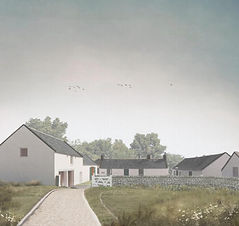
THE family home of Robert Burns is set to be refurbished through plans for a “quiet and sensitive restoration” of the Category A-listed building.
Ellisland Farm, located near Dumfries, was built and designed by Burns in 1788 and became his family home where he wrote over a quarter of his works, including Auld Lang Syne and Tam o’ Shanter.

Whitesands Legal Challenge Collective
Protect Dumfries — Support a Lawful Challenge
We are raising funds to obtain specialist legal advice — and, if necessary, seek interim interdict and pursue Judicial Review — in relation to the Whitesands Flood Scheme.
Our concerns focus specifically on:
• Failure to comply with Section 75(2) of the Local Government (Scotland) Act 1973
• Potential breaches of Section 104 of the Community Empowerment (Scotland) Act 2015
• The lawful handling of inalienable Common Good land
If Section 75(2) has not been properly complied with, the Council cannot lawfully proceed with works affecting Common Good assets. Court intervention could require the Council to halt progress until statutory consent is sought and determined — a process that may involve full judicial scrutiny and further public representations.
This challenge is about legality, transparency, and proper process — nothing more, nothing less.
All funds will be used solely for legal advice and associated expert input.
If the full amount is not required, surplus funds will be refunded to donors on a pro-rata basis.
How You Can Help
1. Donate what you can
2. Share this page
3. Stand with us
Together, we can protect Dumfries’ future.
This is our town. Our river. Our heritage. Our responsibility.
Let’s make sure the flood scheme — and the Section 75 process behind it — is done properly, lawfully, and with respect for the place we love.
Whitesands LCC
from Coach and Horses Facebook Page


Up to £38 Million Contract Awarded to Advance Whitesands Flood Scheme
Dumfries & Galloway Council has announced that McLaughlin & Harvey has been appointed to carry out work on the proposed Whitesands Flood Protection Scheme in Dumfries.
The council confirmed the contract is valued at up to £38 million. Full approval for the project is still pending.
The scheme aims to provide protection for homes and businesses along the River Nith while also creating new public space.
According to the council, the project will include a combination of flood defences and public realm improvements. Preparatory work has already taken place, including invasive ground investigations in 2024.
Further details, including final approval and timescales, will be confirmed in due course.
The council has published a full statement, which can be read here: https://www.dumfriesandgalloway.gov.uk/news/2025/ps38-million-contract-awarded-advance-flood-scheme-full-approval-pending
Editor’s note: This article was updated on 19 September 2025 to reflect Dumfries and Galloway Council’s official press release clarifying that full approval of the scheme is still pending.
article from Dgwgo.com
